Writers On The Move: The Virtual Book Tour (a primer and example):
"I know all about online book tours," (says Magdalena Ball). "Right now I'm smack dab in the
midst of one. You know about them too, because you're here, reading
this..."
And she most certainly does know what she's talking about and explains it well.
She is also tonight --Monday March 12 at 7pm Est (US) giving a free webinar on creating Facebook Fan Pages.
Get the details from
Writers On The Move: Workshops:
March 12, 2012 Writers Workshop! Title : Designing Customized
Facebook Fan Pages Date: March 12, 2012 Time: 7PM, EST USA
I'm hoping to attend...if I can stay awake and Maggie is well worth staying awake for.
Monday, 12 March 2012


Motivation Monday
Time-Saving Tip
Organize email. All email providers allow you
to save and categorize your posts into named
folders or files. I spent ten minutes last week
battling my emails into a vague format
reminiscent of David Allen's Getting Things Done system.
Check out his free downloads.
Sometimes taking the time to stop and study
does save hours in the day later. I'd reached
over 2600 unread emails on one account alone
and was in despair.
I haven't got the mailbox down to zero but I
have sorted out March. I made folders entitled
@action--do it now or soon, @blog for posts
that would be useful to future blog posts,
@edit for work, @project for writing,
@research, and @reference for things I may look
into when I have time. I'm an optimist.
The @ sign means they head my folder list. The
system also means I delete anything that is of
no imminent use. If anything is important, it
will turn up again or I can always track it
down on the internet. Of course, and this was a
tip from the Kaizen Plan, if you make the first
folder @aawriter, it will be top of the pile,
reminding you of what you are supposed to be
doing with your time.
Distractions and Diversions
Looking for motivation to do nothing? Or even
motivation to stop doing nothing? Then the
Speculative Salon post on 1001 sites to distract writers is a gold mine. Never fear, there aren't 1001 sites but the ones it
lists are fascinating and mainly helpful.
It even contains two to stop you suffering from
internet distraction.
But before you give up internet pleasures for
the day, perhaps take a look at Margaret McGaffey
Fisk's list of writing tools. The various
tracking spreadsheets there might boost the
writing and the word count.
Better still remember to visit her blog on a Friday
for the five interesting links. Call it
research, or finding inspiration or even just
fun.
Motivation Through Opportunity
Apply for a scholarship to the UCLA extension writers' program. Sadly this one is only for US citizens.
Successful students will be able to study on
site or online.
Check out the writing contests on the sidebar.
Aim for one. And polish up an article, a short
story or your novel ready for submission next
month.
My e-Book Progress
So slow this week but I should have another of
the dozen projected chapters finished by
Monday. Spent too much time setting up a new
website for my creative husband.
Achievement note: the creation of a customized header for
his Word Press blog. Now that was motivation
and distraction in one.
Monday, 5 March 2012
Magdalena Ball--On The Value of Slow Writing
With great delight I welcome Magdalena Ball to Slow and Steady Writers today, talking about her writing process and her new novel Black Cow. I am a great admirer of the versatility of her writing which encompasses poetry, short stories, reviews, articles as well as novels. If you are lucky enough to attend her content rich workshops at Muse Writers Conference and Writers on the Move, you may find this hard to believe but she says she is one of the world's slow writers too...


On
the Value of Slow writing

Since
I'm out touring my new novel Black Cow, I've
been doing a lot of interviews. The first thing I always get asked is about
what I'm working on now. Of course I've got a work-in-progress and it's coming
along, but if I provide a very exciting overview of the plotline, it doesn't
mean that the book will hit the bookshelves within the next few months. I'm a
s-l-o-w writer. Is that something I should admit? After all, buzz is all about right now. I'm doing my best to create
buzz for my new novel. Should I disappoint my fans by telling them that it will
be at least two years before I've finalised the first draft of my third novel,
and that's not counting the six months in plotting I've already spent on it? Though
it isn't as hot as the slow food movement, slow writing is gaining, well,
momentum (that's momentum of the tortoise variety). Yes, it's a movement, if
not a revolution. So what is slow
writing and why write slowly?
Slow writing is about putting quality
before speed. Like a long, slowly cooked Coq
Au Vin, slow writing is well crafted, with rich, complex flavours, and
deep, powerful characters. This sort of writing can't be chugged out. There's
not much in the way of a rote formula to help you if you want to write this
kind of work. Everything has to be fresh, new, and impeccably crafted. Slow writing not only takes time to craft at
the front end, it takes revision. That's lots of revision, not only on our own,
but with the help of a canny editor.
That often means that the work has to be left for a little while after a
first draft is finished, maybe several months to gain some all-important
perspective. Then the work has to be read critically, like a reader might, with
an eye to rhythm, to character development, to story and character integration,
to that subtle but critical transformation that occurs between the pages of the
book.
Research, Reading and Readers
Slow writing allows for full and extensive
research. This means taking the time to really find out the historical context
of the period you're writing in, reading extensively. It might involve travelling
to your setting, or consulting other books, or interviewing experts.
Slow writers have slow readers in mind.
That is, readers who take the time to enjoy the care with which you've crafted
your book, to enjoy the subtle references and connections, the implications,
the deeper themes, and to find the poetry in your prose.
Slow writing doesn't mean that the book you
create is difficult, unwieldy, or laborious. Quite the contrary, because the careful,
slow crafting will almost always equate to a smoother, easier, and dare I say
it, quicker read for the reader. But
together, the slow writer and the slow reader form a partnership that begins
and ends with attention, that precious
and all too rare commodity in these fast paced times.
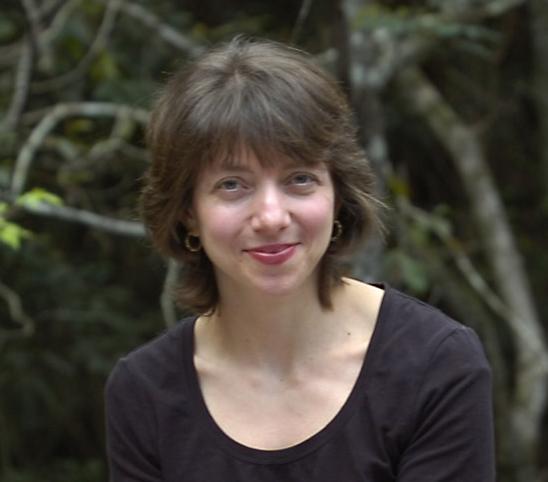
Magdalena Ball is the author
of the novel Black Cow. Grab a free
mini flip book of the book from
Bewrite Books http://www.bewritebooks.com/mb/BlackCow/BlackCow.html
And a final postscript from me to say that Black Cow truly is a very good book. When I have finished reading it I shall be adding yet another five star review to all the others already posted on Amazon. Find out more about the author and read an excerpt from Black Cow.
Subscribe to:
Posts (Atom)